- Supply Chain’s Next Decade of Dealing With the Unknown
 by Yossi Sheffi on November 13, 2023 at 4:25 pm
LinkedIn published my 100th Influencer article last month. The inaugural post appeared on March 4, 2014, and was about the rising status of the supply chain profession. Reaching this milestone got me thinking about how the profession might change over the next decade.Some events and trends driving the supply chain’s standing back in 2014 remain just as influential in 2023. What strikes me as different today is that the new challenges we face are turning points for supply chains — and, hence, the world.Common interestsMy 2014 post noted how the profession has evolved beyond its transportation/ warehousing roots to become a strategic resource.“SCM’s journey from afterthought to core capability parallels the way in which the business landscape has changed over the last two to three decades,” I wrote.The emergence of just-in-time manufacturing, other business models, and globalization were among the drivers reshaping the business landscape. Other drivers, such as the growth of e-commerce and the changing world order of nations, are still in evidence today.Another challenge described in the 2014 post we are still grappling with is ensuring that the supply chain profession has the right talent to meet its changing needs. In my 2014 piece, I argued that educators need to play a role here and pointed to the planned launch in 2015 of the groundbreaking MITx MicroMasters® Program in Supply Chain Management online program as an example of what educators can contribute. My proposal was prescient — the program celebrated its one-millionth enrollment in September 2022 and is still growing.Decisive phaseBut some of the 2014 challenges we still witness today have become more urgent. One example is sustainability.At the time, I started a research project on supply chain sustainability that culminated in my book “Balancing Green: When to Embrace Sustainability in Business (and When Not To)” (MIT Press, 2018). The research, the data, and my experiments led me to draw two main conclusions: first, environmental sustainability is all about supply chain operations, and second, most consumers are not ready to change their lifestyle to avoid additional atmospheric warming. As a result, despite all the conferences on the topic, modeling efforts, and media coverage, neither companies nor governments can take the decisive actions called for by sustainability advocates (in the book, I argued for technological solutions, first and foremost, nuclear power).Nowadays, many firms are downplaying or even abandoning pledges to achieve net-zero carbon emissions levels within specified time frames. The 2023 State of Supply Chain Sustainability report, published by the MIT Center for Transportation & Logistics and the Council of Supply Chain Management Professionals, elicited responses from more than 2,300 professionals around the globe. Only 35% confirmed that their companies have net-zero goals. Almost half indicated that their organizations will not begin measuring or reducing Scope 3 emissions (those associated with assets not owned by the reporting organization) for five years or more. It has become apparent that accounting for Scope 3 emissions is a very tough nut to crack.Meanwhile, despite copious media coverage of the continuous warming of the earth (the past eight years have reportedly been the warmest on record), global emissions are still increasing.Another force for change in 2014 that looms large today is the aging of populations. The World Health Organization estimates that by 2030, 1 in 6 people in the world will be aged 60 years or more. By 2050, the world’s population of people aged 60 years and older will double (to 2.1 billion).My colleagues at our center’s AgeLab have studied the impacts of this demographic timebomb in detail, including the implications for supply chains. For example, graying populations will create more demand for home-based services, requiring companies to develop supply chains that extend into the home. Aging trends are also likely to accelerate automation to compensate for the growing deficit in the number of workers in many jobs. The unevenness of global aging patterns (advanced economies are in much worse situations than developing countries) may also lead to more businesses moving to emerging economies and increased economic migration.New challengesIn 2023, we faced challenges not on decision-makers agendas a decade ago. Chief among them is the fallout from the Covid-19 pandemic. The shortages, inflation, and dearth of workers caused by the crisis have brought supply chain issues from the board room to the living room. The pandemic raised public awareness of the supply chain profession to levels unimaginable in 2014.Also, governments and companies are re-evaluating the structure of global supply chains in the aftermath of the pandemic.Governments are taking steps to shore up national supplies of critical materials while companies are examining where they purchase materials and components. Increasingly, lowest cost considerations also require companies to look critically at Chinese suppliers, as one of my latest LinkedIn blogs describes. Often, these reviews lead to the establishment of new sources in other geographies, reshoring, and friend-shoring.VUCA (volatility, uncertainty, complexity, ambiguity) forces preoccupied supply chain professionals in 2014 as they do today. However, the pandemic ratcheted up these disruptive forces, and the consequences are still profoundly changing how supply chains are designed, built, and managed. Moreover, new coronavirus variants continue to emerge, and we cannot dismiss the possibility of another pandemic.Managing the many uncertainties described above requires companies to build resilience into their supply chains — a significant challenge in the future. Resilience was of vital importance in 2014, but today, the challenge is, in many ways, more demanding. For example, companies must perform trade-offs between costs and resilience by evaluating many factors, including cultural differences, workforce availability, and geopolitical considerations in reconfiguring their supply bases.Another global challenge that had not reared its head 10 years ago is the rapid advance of artificial intelligence (AI) in the workplace. While “traditional” AI was in use a decade ago and even earlier, the emergence of generative AI has added significant momentum to the development and implementation of algorithms in workplace applications. These developments have also brought AI to consumers’ consciousness, creating fears of job losses on the one hand and increasing the pressure on businesses to demonstrate leadership on the other. From a supply chain perspective, AI is transformative as an agent of change in the workplace and an accelerator in the race to digitize and automate.Be preparedHow will the challenges recalibrating the supply chain profession today pan out over the next decade?We already know that to excel in today’s fast-changing, AI-infused world of supply chain management, practitioners need soft skills such as the ability to communicate as well as hard technical skills. This requirement is likely to gain in importance over the next decade. Flexibility is another capability that is at a premium today: the ability to flex with never-ending change. Operating in a VUCA world will require supply chain professionals to be supremely flexible and responsive.Demographic shifts and geopolitics will likely lead to more regional supply networks, possibly closer to consumer locations. Some operations could move to developing regions that can supply workers. As supply chain operations move closer to consumers, the strategic contribution of the function is likely to increase as its role in revenue generation becomes even more apparent.AI will open up a range of new workplace challenges, especially how individuals learn to work alongside machines. As I explain in a recent Harvard Business Review article: “Today’s workers need ongoing, incremental re-skilling or upskilling to maintain a stable or improving career path.” Frameworks for how humans and AI-driven systems will become co-workers are emerging, and I describe some of these in a recent post.But AI is evolving so rapidly that it is impossible to plot its course over the next decade with certainty. Predicting our geopolitical future is also fraught with uncertainty. In addition, new technologies for energy generation may move from the lab to the field, changing current supply chain considerations and the balance of power among nations.The only trend “baked in” is the aging of the world’s population, although we can’t be sure what its full ramifications will be over the next decade.Being prepared for any eventuality — whether anticipated or unknown — has always been fundamental to the supply chain manager’s role. That will be true more than ever in the coming years.Supply Chain’s Next Decade of Dealing With the Unknown was originally published in MITSupplyChain on Medium, where people are continuing the conversation by highlighting and responding to this story.
- The China Dilemma: Stay or Leave?
 by Yossi Sheffi on October 17, 2023 at 9:31 am
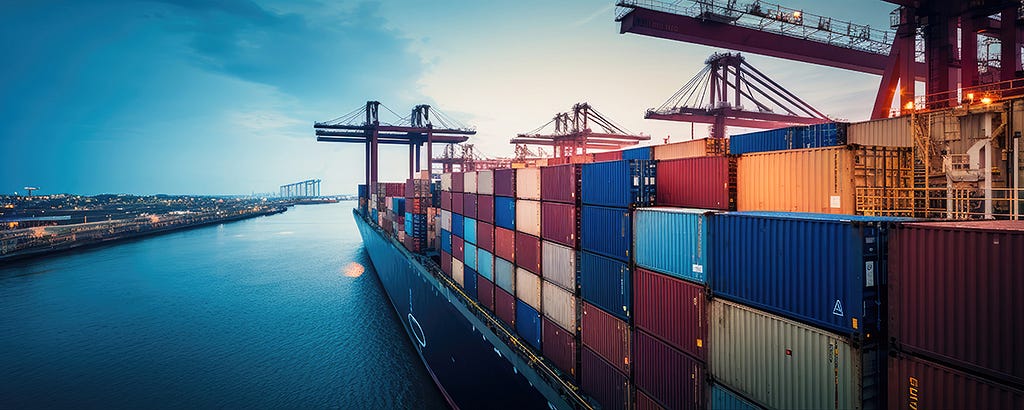
In these unstable times, keeping most of your sourcing eggs in the China basket has become inadvisable, and companies appear to be putting a lot more energy and resources into finding alternatives to the world’s workshop.In these unstable times, keeping most of your sourcing eggs in the China basket has become inadvisable, and companies appear to be putting a lot more energy and resources into finding alternatives to the world’s workshop.In a survey of the US-China Business Council’s member companies, 28% expressed pessimism about the outlook in China, up from 21% last year. The number of optimistic companies fell to a record low of 49%. More than one-third of respondents said they have reduced or paused planned investments in China over the past year.As I described in my 2020 post Moving Out of China? Not Really establishing relatively small-scale operations elsewhere as a hedge against over-dependency on Chinese manufacturing is commonly called the “China + 1” strategy. Is this strategy no longer tenable as companies strive to withdraw most, or even all, of their operations from China?Doubts on many frontsIt seems that hardly a day goes by without a story about some plan to lessen the West’s reliance on China. There are various reasons for these moves to cold-shoulder the country.Enterprises are reevaluating their presence in light of China’s deteriorating economic outlook. A slew of international investment firms have downgraded 2023 GDP growth forecasts for China from around 5.5% to 5%. Weak domestic demand, stalled real estate markets, and high youth unemployment are among the problems that have taken the shine off China’s reputation for consistently delivering high growth rates. There is concern that it will take years to rebalance the country’s faltering growth engine.These economic woes are unfolding against heightened geopolitical tensions, especially between China and the United States. Anxiety over the West’s dependence on China for strategically vital materials and components such as microchips has grown markedly in this post-pandemic period. The country’s recent announcement that it is curbing exports of gallium and germanium, minerals used in semiconductor manufacturing, is a reminder of its willingness to exert control over critical markets. The Biden administration recently issued rules designed to prevent billions of dollars in federal grants to US chipmakers from being used to expand manufacturing in “foreign countries of concern,” including China. The concept of “friend-shoring,” reorienting international supply chains towards countries deemed friendly, has become fashionable.The Covid-19 pandemic has also left a mark on China’s reputation for efficiently managing its economy and society. If there is one lesson that stands out from the crisis, it is that assuring sources of supply is one of the most critical supply chain challenges faced by companies in today’s volatile business environment. During the outbreak, the Chinese government implemented its “zero-covid” policy to stamp out resurging infections. The draconian measures closed production lines and disrupted supply chains, casting a shadow over the country’s reputation as a reliable supply source. Pandemic-weary companies were already engaged in efforts to de-risk their global supply chains by, for example, expanding their supply bases internationally. The disruptions in China provided another reason for reassessing relationships with suppliers there.The changing world order is another reason for reviewing China’s standing on the world stage. India’s rise as an economic power and the fallout from Russia’s brutal invasion of Ukraine are among the forces redrawing the global geopolitical map.On the upsideHowever, as I explained in my 2020 post cited above, companies have spent hugely building elaborate supply chains in China over recent decades. They are loathe to simply abandon this infrastructure — even assuming they can find reliable alternatives. China still offers manufacturing expertise and capacity that is difficult to match elsewhere.Although the country’s traditionally high annual growth rate is now moderating due to structural problems, China still represents a significant market with the world’s second-largest GDP. The country’s largest province, Guangdong, is estimated to have a nominal GDP larger than Canada’s.It is also essential to keep in mind that for decades, China has been investing in technology to move up the value chain. This ambition is undiminished today and has yielded leading positions in future-shaping markets such as batteries, EVs, and solar energy technology.Spread the riskThere are good reasons to stay in China as a buyer of its materials and components and as a competitor in the country’s vast consumer markets. On the other hand, sound reasons exist for diversifying supply chains away from the country.Given these tensions, the ‘China + 1’ strategy needs a makeover — but still has merit. Companies should maintain a significant presence in China while pursuing other options elsewhere. Maybe today’s approach could be called the “China + Others” strategy, reflecting a world without sure bets.The China Dilemma: Stay or Leave? was originally published in MITSupplyChain on Medium, where people are continuing the conversation by highlighting and responding to this story.
- Yellow’s Demise Underscores the Need for a New Labor Relations Narrative
 by Yossi Sheffi on August 21, 2023 at 7:07 pm
The bankruptcy of trucking company Yellow has attracted considerable attention since the story broke early this month. But an aspect of the story that is under-reported is how the demise of a 99-year-old trucker and the loss of an estimated 30,000 jobs offers essential lessons about the transition to the workplace of the future.Old habits die hardSince Yellow’s bankruptcy was announced on August 6, 2023, the company’s management team and Teamster union officials have been at odds over the causes. Management blames union intransigence over the operational reforms needed to put debt-plagued Yellow on an even keel. Union representatives point to management’s incompetence and wastefulness as key reasons why the ailing trucker finally succumbed. Yellow’s CEO accused the Teamsters of bullying and destructive tactics, while the unions maintained that worker concessions kept the company afloat for over a decade.Regardless of who is right, Yellow’s collapse was long in the making, and the acrimony between the two sides did not help the company’s efforts to secure survival. Nor does it provide much solace for the 30,000 or so workers who will lose their jobs.Yet narratives like this are a hallmark of labor relations. One can envisage management teams pointing to the Yellow debacle as an example of how unions can run amok and destroy companies, reinforcing their warnings against unionization. Unions will probably use the episode to bolster their case that management ineptitude and greed are at the root of many corporate failures. They will argue that workers need trade unions to protect them against managerial misdeeds and to win concessions. Issues such as pay rises continue to dominate negotiations between the two sides.The future is hereThe narrative is well-established, but it misses the point at a time when AI’s inexorable advance in the workplace is changing the employment agenda.New challenges — especially addressing how to prepare employees for an AI-driven workplace — require urgent attention yet remain overshadowed by traditional dialogues.For example, negotiations over long-haul trucking driver pay will carry less weight when autonomous vehicles arrive in the not-too-distant future. Now is the time for management and unions to talk about how future fleets of autonomous vehicles will be managed remotely, how to train today’s drivers to fill this role, and how to develop training programs for the operators, mechanics, and supervisors of tomorrow.Failing to address challenges like these makes the transition to the workplace of the future much more difficult to navigate. Moreover, labor relations will become even more rancorous if unions keep fighting against adopting algorithms and automation technologies. Companies will come under increasing pressure to automate as competitors reap the benefits of innovation. Union representatives will feel pressure from members scared of AI’s impact on their employment prospects to be more militant even as their companies lose ground to more technologically savvy competitors.The signs of such confrontations are already in evidence. Consider, for example, how certain North American ports need to catch up to ports in Asia and Europe in the race to deploy automation to improve competitiveness. The recent stoppages at Vancouver and Los Angeles ports are symptomatic of a failure to confront the need to embrace tech-driven change.Redrawing the employment mapFighting against the advance of AI and other innovations is a losing battle. Ignoring it is just as futile. Rather than using corporate failures such as the Yellow bankruptcy as an excuse to double down on increasingly outmoded negotiating tactics, management and unions should use these failures to spur change in the workplace. Unions may want to moderate short-term demands for gains such as pay increases and improved benefits. Instead, they can use their negotiating power to force employers to invest in upgrading workers’ skills, offer new education and training programs, and install technology at a measured pace that allows workers and machines to learn to work together and contribute to an integrated human/machine workforce.The advance of AI can cost jobs and weaken workers’ rights in the short term. However, new employment opportunities will emerge in the medium to long term, and the need for different skill sets will become apparent. Employees, companies, and governments can use the time now to start planning for the new economy.It is the job of management and employee representatives to map a future in which workers and AI are integrated into seamless workflows, guaranteeing workers’ employment and commercial success for companies.Yellow’s Demise Underscores the Need for a New Labor Relations Narrative was originally published in MITSupplyChain on Medium, where people are continuing the conversation by highlighting and responding to this story.
- Faceless AI Will Not Relegate the Social Side of Business to the Past
 by Yossi Sheffi on June 5, 2023 at 7:13 pm
Supply chain management is a people business and will remain that way even amid the rise of AI and automation.My previous blog post explains why the flexibility of human workers will play a critically important role in the automated workplace of the future. In this post, I argue that humans will be an essential part of the external work environment in an AI-driven world.Again, the arguments are put forth in more detail in my new book, The Magic Conveyor Belt: Supply Chains, A.I., and the Future of Work. As the book explains, algorithms will not replace the human interactions and communities underpinning global commerce. I use the structure of supply chains to illustrate the point.Supply chains as social entitiesSupply chains are more than just faceless corporations and transactional flows. The people in supply chain organizations have the agency to direct and modulate those flows. Therefore, when making decisions in a supply chain, such as managing exceptions or escalating problems, the personal relationships between the people in companies and their customers and suppliers matter.As Lynn Torrel, chief procurement and supply chain officer at Flex, explained the company’s operations during the Covid-19 pandemic, “We’ve had a few escalation calls with suppliers, and you get on a call, and there are critical needs. Often, it’s someone I’ve known for many years. We had a hard negotiation and then a really good dinner and spent time together, and we’re always seeing each other at different events. I think that personal side is important, especially the relationships and trust that build over time.”Person-to-person communications help provide unstructured information about what is happening and what each side is considering doing. It helps in negotiating a solution and obtaining mutual commitments to action. “You can be as technically savvy as you want,” Torrel said, “but at the end of the day, you’ve got to pick up the phone and see if you can get a solution.”Expansive ecosystemsCustomer-supplier relationships in supply chains can be quite complex. Large organizations can have a web of personal relationships at supplier and customer organizations that span many levels or functions in each other’s enterprises. For example, operational and administrative personnel might interact frequently to solve problems with purchase orders, shipments, and payments. Engineers in both organizations interact when working on new products and implementing technologies. Finally, managers and executives hold strategic discussions and negotiations.Companies often maintain teams dedicated to specific high-profile customers, creating long-term, person-to-person relationships. Good person-to-person relationships create a social bond that modulates how the companies treat each other. To this end, Procter & Gamble, for example, has an office in Bentonville, Arkansas, next to Walmart’s offices. It is staffed with several hundred people dedicated to the P&G/Walmart relationship. So many other vendors have such offices around Walmart that the area is dubbed “Vendorville.”In the case of strategic customers and suppliers, supply chain relationships can extend to the executive suite. For example, when GM faced chip shortages after the 2011 Tohoku earthquake, CEO Dan Akerson used his position on the board of chipmaker Freescale to seek an alternative source of chips. “I picked up the phone, called the CEO of Freescale, and said, ‘I know you make chips of this type.’ We came up with a solution,” Akerson said.Wider collaborationsThe social networks implicit in supply chains also extend beyond direct supplier-customer connections, as the case of a disruption at Evonik Industries shows. On March 31, 2012, a tank filled with highly flammable butadiene exploded in one of Evonik Industries’ chemical factories in Marl, Germany. Roughly 130 firefighters fought the blaze for 15 hours at the cyclododecatriene (CDT) plant.CDT is a critical ingredient in manufacturing a high-tech type of nylon called PA-12. The auto industry uses this tough plastic for fuel lines, brake lines, and housings. The average light vehicle in 2021 included 400 pounds of the material. PA-12 also goes into solar panels, athletic shoes, ski boots, optical fibers, cable conduits, and flame-retardant insulation for copper wire.The Evonik fire destroyed almost half the world’s production capacity for CDT. Worse, at the time, supplies of CDT were already tight due to its use in the booming solar power industry. In the auto industry, the fire threatened a significant and prolonged disruption of car production.In response, the entire auto industry sprang into action. An emergency summit was attended by 200 people representing eight automakers and 50 suppliers. In addition, six committees and multiple technical follow-up groups were formed to help create action plans to lessen the impact of CDT shortages. This multifaceted collaboration was vital to overcoming the supply challenge. For example, Kansas-based Invista Inc., the maker of Stainmaster brand carpets, released its contractual claims on capacity for the production of CDT so more could be allocated to the auto industry. In the end, cars continued to roll off the line even though the Evonik factory was offline until December 2012.A salutary lessonAs these examples show, supply chain management is a people business and will remain that way even as AI and various technologies continue to make inroads into corporate operations. The same can be said for other functional areas.It’s a lesson we need to remember as we plot a path for future applications of AI.Faceless AI Will Not Relegate the Social Side of Business to the Past was originally published in MITSupplyChain on Medium, where people are continuing the conversation by highlighting and responding to this story.
- This Is Not the Time to Downgrade Supply Chain Sustainability
 by David Correll on May 17, 2023 at 6:24 pm
Pressure from various stakeholders to make supply chains more sustainable has grown steadily over the last three years and shows no signs of abating.by David Correll and Ken CottrillThe uncertain economic and political outlook might persuade some companies to dial back their efforts to improve the sustainability of their supply chains. Some enterprises may even be more amenable to bolstering their sustainability credentials with greenwashing.Our extensive research shows that both courses of action are ill-advised. The pressure from various stakeholders—notably investors — to increase the sustainability of supply chains has grown steadily over the last three years and shows no signs of abating. Moreover, global crises have a way of bringing supply chains and sustainability to the fore.A panoply of other issues and uncertaintyCompanies are grappling with the likelihood of an economic recession, increasing layoffs, persistent inflation, an unending war in Ukraine, and the prospect of a presidential election in 2024.Pushback against green investments is another source of uncertainty. For example, US Senate Energy Committee Chair Joe Manchin, a supporter of fossil fuel interests, recently threatened court action over plans by the US Treasury to publish guidance on electric vehicle tax credits. Lawmakers in the state of Wyoming have said they want to ban electric vehicles to protect the oil and gas industry.In addition, companies are busy managing the transition to a post-pandemic world. In March of this year, the Federal Reserve Bank of New York declared that global supply chains have returned to normal after three years of turmoil caused by the Covid-19 pandemic. As a result, many companies are rethinking their supply chains to make them more resilient and responsive to changing market demands.Unrelenting pressure to make supply chains more sustainableGiven these pressures, it is perhaps understandable that sustainability in supply chains slips down enterprises’ list of priorities. However, the State of Supply Chain Sustainability report, published annually by the MIT Center for Transportation & Logistics and the Council for Supply Chain Management Professionals, shows that the importance of such investments is not diminishing.Over the four years of the survey’s existence, we have collected almost 10,000 responses from supply chain professionals worldwide. We’ve also conducted dozens of interviews in multiple languages with supply chain leaders from various countries and industries to give context to the data we collect.Every year, we ask our survey respondents to rank the level of pressure that their firm faces to increase supply chain sustainability. We isolate ten sources of pressure, including consumers, regulators, investors, and employees. Most respondents ranked the ten pressure sources as “high” to “very high,” with almost every source showing an increase over the years 2020 to 2022. Investors’ pressure rose dramatically during these years, followed by corporate buyers, executives, and consumers. Our analysis of the 2023 results indicates that this pressure is translating into action. We observed statistically significant relationships between how firms rate pressure from their investors and their declaration of net zero goals.Interestingly, four years of our research findings indicate that global crises do not dampen firms’ commitments to the cause. For two consecutive years, from 2021 to 2022, roughly 80% of respondents reported that their firms’ supply chain sustainability efforts were undaunted by the global pandemic. In 2023, 70% of respondents said that the projections of global economic contraction ahead did not affect firms’ commitments to improving supply chain sustainability. The 2023 survey also asked about Russia’s invasion of Ukraine on supply chain sustainability efforts. Only 30% of respondents reported an impact — and among those, 70% said that their firm’s commitments to supply chain sustainability increased following Russia’s invasion.Our qualitative research provides some insights that might explain these findings. For example, in our semi-structured executive interviews regarding the Covid-19 pandemic, we heard several respondents describe how the pandemic brought supply chain management — particularly supply chain transparency and resilience — to the fore in unprecedented ways. Likewise, global crises seem to spotlight the importance of supply chains, bringing more visibility and bigger budgets to sustainability issues.No easing of pressure on the horizonWhile economic and political concerns will continue to attract attention — so will sustainability issues.The impact of climate change on increasingly severe weather patterns is capturing headlines worldwide. The Intergovernmental Panel on Climate Change (IPCC) issued a “final warning” in March 2023 on the fallout from what it sees as a climate crisis. The warning was part of the IPPC’s comprehensive assessment report.As more people become aware of supply chain’s critically important role in any functioning society, they will also make the connection with the critical role supply chains play in a sustainable future. We are confident that this growing awareness will continue to be reflected in the increasing pressure on companies to invest in supply chain sustainability.The 2023 State of Supply Chain Sustainability report, co-presented with the Council of Supply Chain Management Professionals (CSCMP) and supported by Avetta, C.H. Robinson, and Isometric Technologies, will be available in October 2023.David H.C. Correll is a Research Scientist at the MIT Center for Transportation & Logistics. He also serves as Co-Director of the MIT FreightLab and Lead Investigator for the annual State of Supply Chain Sustainability report.Ken Cottrill is Editorial Director at the MIT Center for Transportation & Logistics.This Is Not the Time to Downgrade Supply Chain Sustainability was originally published in MITSupplyChain on Medium, where people are continuing the conversation by highlighting and responding to this story.